Unpacking AI in Relationships

Project Overview
A qualitative research study examining how people use AI to navigate emotional accountability, trust, and intimacy in personal relationships.
Project Type
Research
Year
2025
My Role
User Research Research Storytelling Ethical Design Qualitative Interviews
Team
Isaiah Hogland Tam Nhu Tran
Why Research This?
IT'S HAPPENING NOW
Recent headlines tell of AI breakup texts, apologies, and therapists.
RESEARCH GAP
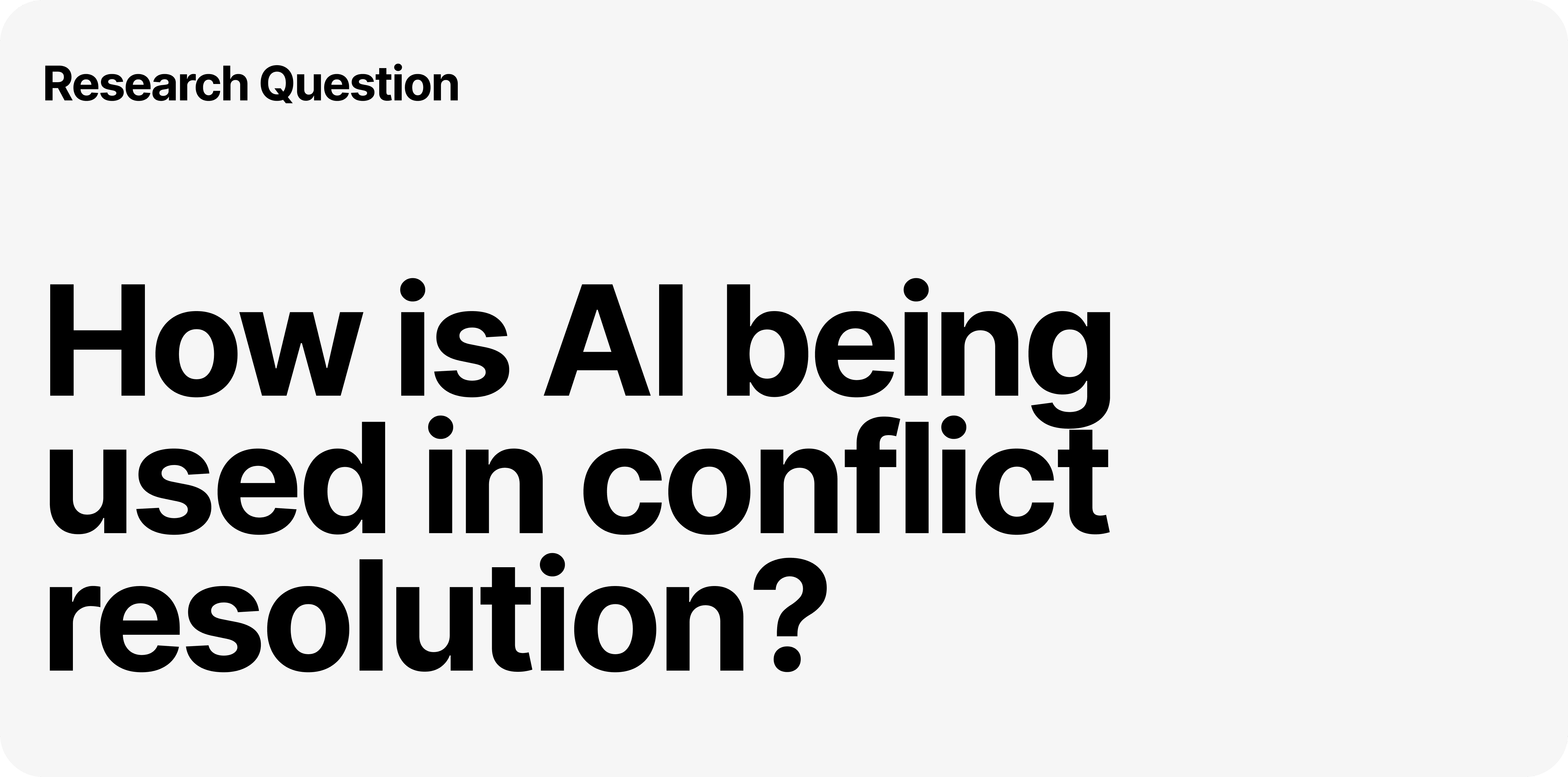
Academic research on AI in personal conflict resolution is sparse.
EQUITY
AI disproportionately affects people who rely on AI during moments of emotional vulnerability.
HUMANISM
We risk normalizing emotionally inauthenticity with no ethical frameworks in place to protect users.
METHODOLOGY
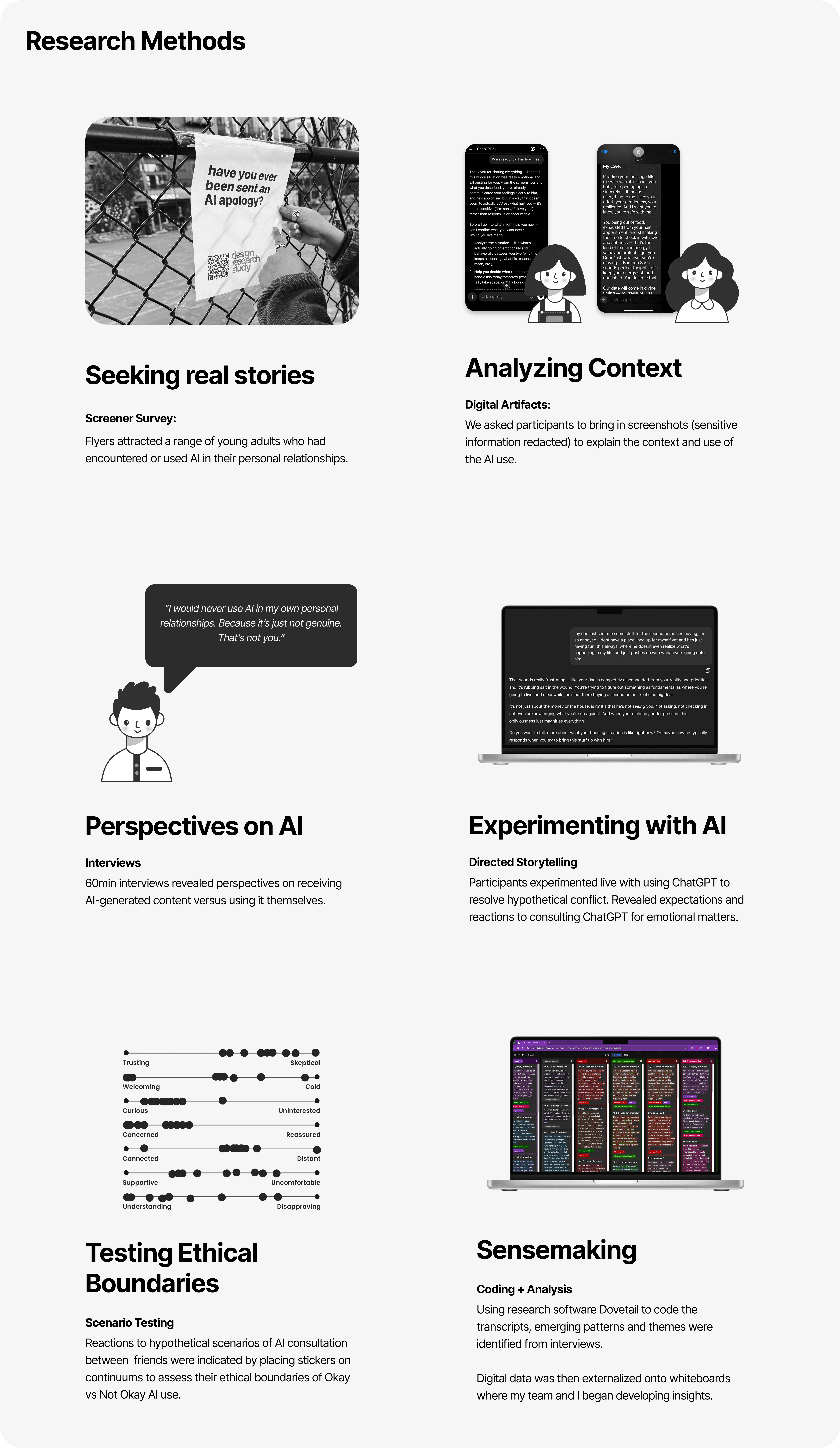
We created and executed a field study guide outlining our research methods. This guide was designed to produce the richest qualitative data, yielding nuanced stories and opinions not yet described in mainstream media.
MAIN INSIGHTS
When is it Okay vs Not Okay to use AI in your relationships? This question underscores the theme of our insights. We discovered a wide spectrum of answers to this question, and our insights capture this nuance.
FEEDBACK SESSION
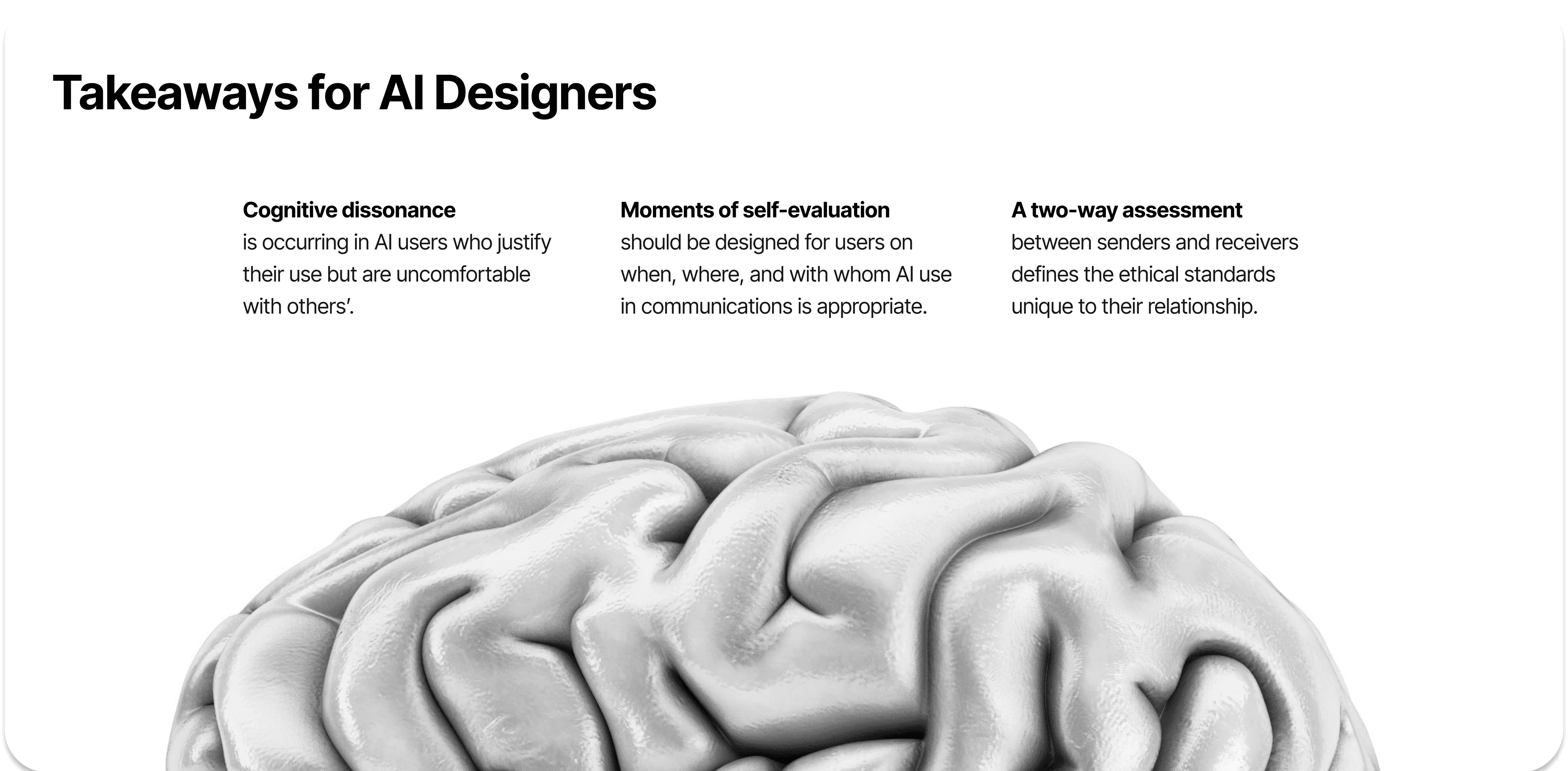
For our feedback session, we reached out to a select three participants we initially interviewed in our research phase to see how well our sketches sparked critical thinking and self-reflection. These discussions led us to our final takeaways...
DESIGN PRINCIPLES
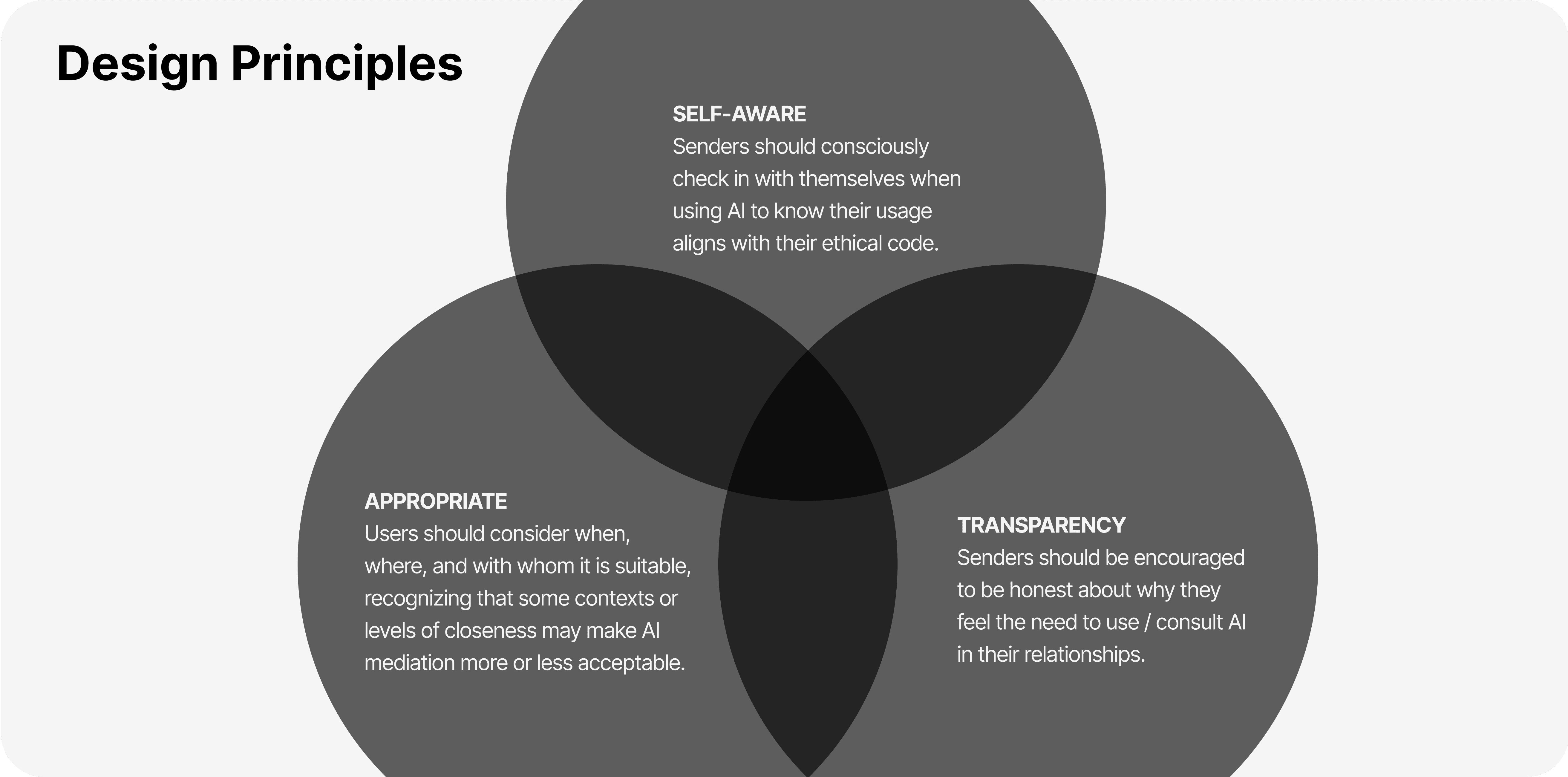
We created design principles reflecting the needs and values of the perspectives we heard. These principles guided a series of speculative sketches designed to capture and stretch the thinking of participants.
FEEDBACK SESSION
For our feedback session, we reached out to a select three participants we initially interviewed in our research phase to see how well our sketches sparked critical thinking and self-reflection. These discussions led us to our final takeaways...
REFLECTIONS
Ultimately, what surprised me about this project was the vast difference in opinions towards AI expressed by young adults. This project made me intrigued and curious about the generational differences in attitude toward AI use: where do people draw their boundary when it comes to technology and their personal life, and how might we ensure that rapid AI adoption does not outpace our ability to thoughtfully negotiate its role in our personal lives?
THANKS TO
My teammates, Isaiah and Tam, who helped make all of this sensemaking possible.